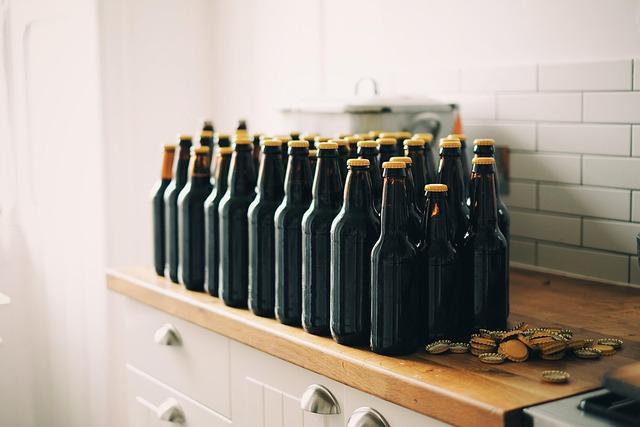
In a remarkable underwater discovery, two beer bottles dating back 170 years have been retrieved from a shipwreck in the Baltic Sea, prompting scientists to investigate whether the centuries-old brew inside is still drinkable. The bottles, remarkably well-preserved in the cold, dark depths of the sea, offer a rare glimpse into 19th-century brewing techniques and have sparked media intrigue worldwide. Researchers are now conducting a series of tests to determine the condition and quality of the vintage beer, shedding light on maritime history as well as the durability of alcoholic beverages over time.
Ancient Baltic Sea Shipwreck Yields Two Well-Preserved 170-Year-Old Beer Bottles
During an underwater excavation of a 19th-century shipwreck in the Baltic Sea, marine archaeologists uncovered two remarkably intact beer bottles, dating back approximately 170 years. Thanks to the cold, low-oxygen environment of the seabed, these glass containers have preserved their contents better than most artifacts of similar age found in marine settings. Initial visual inspections revealed the original corks still in place, while the bottles’ labels, although faded, displayed traces of their brewing origins, offering a rare glimpse into the beverage culture of that period.
Scientists are now conducting a series of rigorous tests to determine whether the beer inside remains drinkable or if the liquid has transformed chemically over the centuries. The analysis focuses on:
- Alcohol content – to assess fermentation preservation
- Chemical composition – checking for spoilage and contamination
- Microbial life – identifying any surviving yeast or bacteria
- Historical brewing techniques – understanding 19th-century Baltic brewing methods
| Test Type | Expected Outcome | Significance |
|---|---|---|
| Alcohol Content Analysis | Reduced but detectable | Indicates fermentation stability |
| Chemical Stability | Presence of organic compounds | Helps determine spoilage level |
| Microbial Culturing | Minimal active microbes | Shows preservation conditions |
Scientists Initiate Comprehensive Analysis to Determine Drinkability and Chemical Composition
Researchers have embarked on an ambitious project to meticulously evaluate the contents of two beer bottles recovered from a centuries-old Baltic Sea shipwreck. These bottles, remarkably preserved beneath layers of sediment, are believed to be approximately 170 years old. By employing advanced chemical analysis techniques-including gas chromatography and mass spectrometry-teams aim to unravel the precise composition of the liquid inside, seeking clues about the brewing methods of the 19th century as well as the beer’s current chemical state.
The testing process also focuses on assessing the drinkability of the beer. Key parameters under examination include:
- Alcohol content and potential degradation
- Presence of harmful bacteria or contaminants
- Flavor compounds and aromatic profiles
- Effect of long-term underwater aging on quality
| Test Parameter | Expected Findings | Significance |
|---|---|---|
| Alcohol Percentage | Approximately 4-6% | Determines preservation viability |
| pH Level | 4.0 – 5.0 | Indicator of acidity and spoilage |
| Microbial Content | Minimal or absent | Health safety assessment |
| Flavor Compounds | Unique historic profile | Cultural and sensory insights |
Experts Recommend Advanced Preservation Techniques to Safeguard Maritime Artifacts and Historical Beverages
Preserving maritime artifacts, especially those as unique as 170-year-old beer bottles salvaged from the Baltic Sea, demands innovative scientific methods that go beyond traditional conservation. Experts emphasize the use of controlled environments that regulate humidity, temperature, and exposure to light to prevent rapid deterioration once these items are brought ashore. Additionally, advanced chemical stabilization processes are employed to halt corrosion and microbial activity, ensuring that the fragile contents and containers remain as intact as possible for further analysis.
Modern preservation also involves interdisciplinary collaboration, combining marine archaeology, chemistry, and food science to safeguard both the physical bottles and their historical beverages. Techniques such as:
- Micro-CT scanning for detailed internal imaging without damaging the artifact
- Non-invasive sampling for chemical profiling of the beer’s composition
- Encapsulation in inert atmospheres to prevent oxidation of organic materials
are critical in unlocking the story these bottles hold. The table below summarizes the key preservation methods currently recommended for such rare maritime discoveries:
| Technique | Purpose | Benefit |
|---|---|---|
| Controlled Environment Storage | Minimize degradation | Extends artifact lifespan |
| Chemical Stabilization | Prevent corrosion/microbial growth | Maintains bottle integrity |
| Non-Invasive Chemical Sampling | Analyze contents without opening | Preserves original state |
| Micro-CT Imaging | Visualize interior in detail | Informs conservation strategies |
Final Thoughts
The discovery of these 170-year-old beer bottles in a Baltic Sea shipwreck offers a rare glimpse into maritime history and brewing heritage. As scientists continue their tests to determine whether the centuries-old brew remains drinkable, this finding not only highlights the exceptional preservation conditions beneath the sea but also sparks curiosity about the past lives and cultures connected to these ancient vessels. Further analysis may soon reveal more about the brewing methods of the time and the journey these bottles endured before their watery resting place.










![Sweden Blocks 2 AI Chatbots, Keeps Copilot [2026] – https://tech-insider.org/](https://europ.info/wp-content/uploads/2026/10/3079689-sweden-blocks-2-ai-chatbots-keeps-copilot-2026-https-tech-insider-org-120x86.jpg)