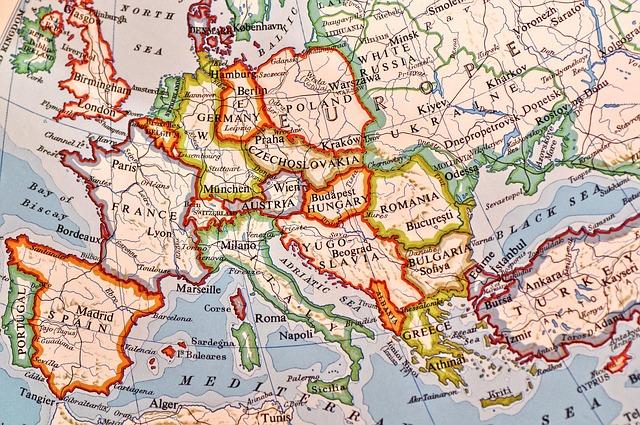
Poland has sharply criticized the head of Ukraine’s state history institute for allegedly downplaying the scale and impact of World War II massacres committed against Poles. The controversy highlights ongoing tensions between the two countries over the interpretation of their shared and often painful history. Warsaw’s response reflects deep concerns about historical revisionism amid a broader debate on how the wartime past is remembered and taught in Ukraine.
Poland Condemns Ukrainian History Institute Chief for Minimizing World War Two Atrocities
Polish authorities have expressed strong disapproval following statements made by the head of Ukraine’s state history institute, which appeared to diminish the scale of atrocities committed during World War Two. Officials in Warsaw condemned the remarks as a distortion of historical facts, emphasizing the importance of acknowledging all victims and preserving the memory of the past with accuracy. The institute chief’s comments sparked a renewed debate on historiographical responsibility amid ongoing efforts to confront difficult aspects of Eastern European wartime history.
The Polish government highlighted key concerns, including:
- The downplaying of documented massacres affecting Polish civilians.
- The potential impact on Polish-Ukrainian historical dialogue.
- The risk of undermining reconciliation efforts in the region.
| Aspect | Polish Position | Ukrainian Institute Statement |
|---|---|---|
| Massacre Recognition | Full acknowledgment of all wartime atrocities | Minimizes some events’ scale and impact |
| Historical Dialogue | Encourages open, fact-based conversations | Raises concerns over selective narratives |
| Reconciliation Impact | Sees truthful history as foundation | Potentially hinders trust-building efforts |
Historical Accountability and Polish-Ukrainian Relations at a Crossroads
Recent tensions have sharply resurfaced between Poland and Ukraine following remarks by the head of the Ukrainian state history institute, which appeared to minimize the scale and responsibility for World War II-era massacres. Polish officials have condemned these statements, emphasizing that acknowledgment of such historical tragedies is crucial for mutual respect and reconciliation between the two nations. The debate highlights how deeply intertwined historical narratives still influence contemporary diplomacy and public sentiment.
Observers suggest that this disagreement is more than a mere historical dispute; it represents a broader challenge to bilateral relations amid shifting geopolitical landscapes. Both countries are confronted with the need to balance national memory with constructive dialogue, as they navigate complex legacies of wartime violence. Below is an overview of the key contentious events cited during the controversy:
| Event | Year | Brief Description |
|---|---|---|
| Volhynia Massacres | 1943-1944 | Ethnic cleansing carried out by Ukrainian nationalists against Polish civilians. |
| Massacres in Eastern Galicia | 1943-1945 | Series of tragic attacks involving both Ukrainian and Polish armed groups. |
| Postwar Repressions | 1945-1950 | Retaliatory actions and resistance movements fueling grievances on both sides. |
- Polish position: Calls for full recognition and condemnation of all atrocities.
- Ukrainian stance: Highlights complexities of wartime resistance and victimhood narratives.
- International observers: Advocate for balanced historical scholarship to aid reconciliation.
Calls for Transparent Dialogue and Education to Address Contested Wartime Narratives
In light of growing tensions over historical interpretations, experts and policymakers alike are advocating for a more transparent and inclusive dialogue surrounding the narratives of wartime events. The controversy has underscored how different national perspectives can lead to fragmented memories, often deepening divisions rather than fostering mutual understanding. Authorities from both Poland and Ukraine emphasize the need for open forums that accommodate a wide array of voices-historians, educators, survivors, and community leaders-to collaboratively examine the complex realities of World War II atrocities.
Educational initiatives are being proposed as key tools to address misinformation and provide balanced perspectives, particularly among younger generations. These measures include:
- Joint Polish-Ukrainian history projects and curricula development
- Public exhibitions highlighting shared experiences and tragedies
- Cross-border academic conferences fostering scholarly exchange
- Interactive digital archives making wartime records accessible to all
| Initiative | Purpose | Expected Impact |
|---|---|---|
| Dialogue Forums | Encourage open conversations between communities | Reduce historical animosities |
| Joint Curriculum | Integrate multiple historical narratives for education | Promote balanced understanding among youth |
| Digital Archives | Provide easy access to primary sources | Enhance transparency and research |
The Conclusion
The ongoing dispute highlights the sensitive nature of historical memory in the region and underscores the challenges in reconciling differing national narratives about World War II. As Poland continues to demand acknowledgment of the massacres, the criticism of the Ukrainian state history institute’s leadership reflects broader tensions between the two countries over their shared, yet deeply contested, past. Observers suggest that constructive dialogue and mutual recognition of historical experiences remain essential for improving bilateral relations moving forward.