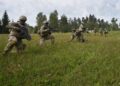
A top U.S. general is scheduled to visit Poland and Brussels this week amid escalating tensions over troop rotations in Eastern Europe. The visit comes as diplomatic efforts intensify to resolve disagreements between Washington and its NATO allies concerning the deployment and movement of American forces in the region. As the dispute highlights broader challenges within the alliance, officials seek to reaffirm commitments to collective security while addressing concerns raised by host nations.
Top U.S. General to Discuss Troop Rotation Challenges in Poland and Brussels
The high-ranking U.S. military official is set to engage with Polish and NATO leaders to address ongoing complications surrounding troop rotations within the region. Recent disagreements have highlighted logistical inefficiencies and scheduling conflicts between Washington and Warsaw, impacting the seamless deployment of forces. Key discussion points include:
- Deployment timelines and alignment with NATO operational standards
- Infrastructure challenges affecting troop movement and supply chains
- Political coordination between U.S., Polish, and Brussels-based NATO authorities
This visit comes at a pivotal time as NATO continues to bolster its eastern flank amid heightened security tensions. The general’s consultations aim to streamline cooperation efforts, ensuring both rapid response capabilities and rotational troop stability. The following table summarizes the primary issues as outlined by military analysts:
| Issue | Implication | Proposed Focus |
|---|---|---|
| Rotation scheduling | Delays in force readiness | Enhanced coordination protocols |
| Base infrastructure | Limited capacity | Facility upgrades and expansion |
| Political alignment | Policy dissonance | Strengthening bilateral and NATO ties |
Strategic Implications of the Troop Rotation Dispute for NATO Allies
The unresolved troop rotation dispute highlights critical challenges facing NATO’s cohesion in Eastern Europe. For allies stationed in Poland and neighboring countries, the disagreement raises concerns about the predictability and sustainability of U.S. military commitments in the region. Defense planners fear that prolonged tensions could complicate joint exercises, intelligence sharing, and rapid deployment capabilities vital to deterring potential aggression on NATO’s eastern flank.
Beyond operational issues, the dispute carries broader strategic implications:
- Alliance Credibility: Divergences on troop rotations risk undermining NATO’s unified front, potentially emboldening adversaries.
- Political Ramifications: Host nations may leverage disagreements to renegotiate bilateral defense arrangements, affecting long-term basing rights.
- Resource Allocation: Shifts in troop deployment strategies could lead to realignments of military budgets and procurement priorities across member states.
| Strategic Factor | Potential Impact |
|---|---|
| Force Readiness | Decreased operational flexibility |
| Interoperability | Delayed joint mission capabilities |
| Diplomatic Relations | Strained bilateral ties within the alliance |
Recommendations for Strengthening U.S.-Europe Military Coordination Amid Rising Tensions
To enhance military coordination between the U.S. and Europe in response to escalating geopolitical pressures, it is essential to institutionalize more frequent and transparent communication channels at all command levels. Establishing joint operational frameworks that anticipate rapid troop rotations and logistical challenges will mitigate misunderstandings, such as those recently highlighted in disputes over troop deployments in Eastern Europe. Emphasizing shared intelligence, cyber defense collaboration, and synchronized training exercises will solidify interoperability and readiness across NATO allies.
- Create permanent liaison offices between U.S. commands and European defense ministries.
- Implement a centralized digital platform for real-time troop movement updates and threat assessments.
- Standardize joint contingency drills focusing on rapid deployment scenarios and hybrid threat responses.
- Expand funding for integrated cyber and missile defense programs.
| Challenge | Recommended Action | Expected Outcome |
|---|---|---|
| Disparate troop rotation schedules | Implement synchronized planning cycles | Reduced operational delays |
| Communication gaps between commands | Create continuous liaison teams | Improved situational awareness |
| Inconsistent cyber defense protocols | Develop unified cyber strategy | Stronger cyber resilience |
In Retrospect
As tensions surrounding the troop rotation dispute continue to unfold, the upcoming visit of the top U.S. general to Poland and Brussels underscores the strategic importance of maintaining strong transatlantic military cooperation. Observers will be closely watching for developments from these high-level discussions, which aim to address allied concerns and reinforce commitment to collective security in the region. Further updates are expected as the visit progresses.